

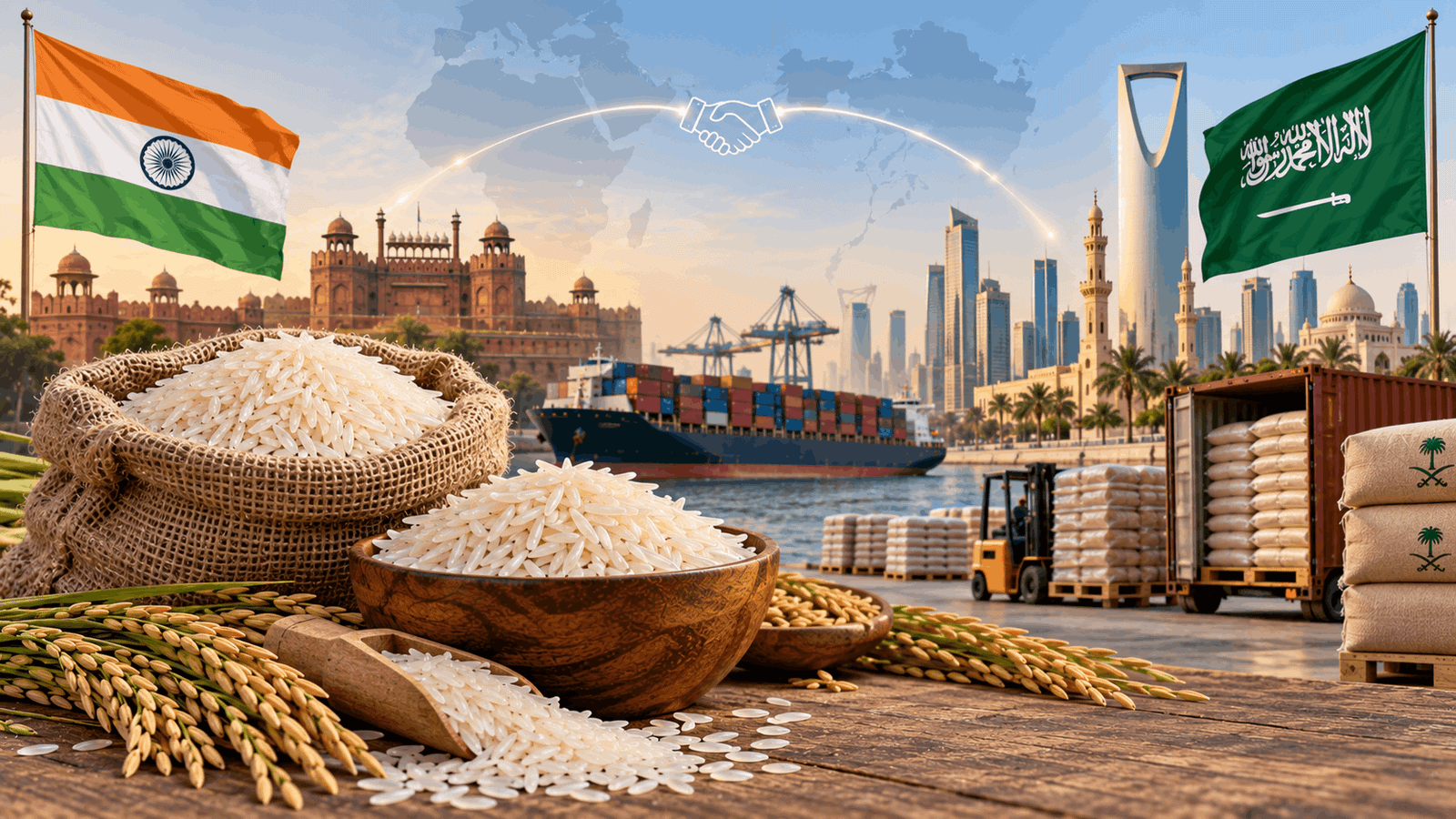
Why Saudi Arabia Depends on Indian Basmati Rice Exporters
Most of the rice consumed in Saudi Arabia is imported and Basmati rice makes up the major portion of those imports. The climate of Saudi Arabia and especially the presence of arid conditions makes large scale rice cultivation unfeasible in the country. Dishes like Kabsa and Mandi which form an important part of the Saudi cuisine, are rice based and hence, to prepare such dishes, the long grain and aromatic rice is to be used. Therefore, the country has to import Basmati rice.
Saudi Arabia’s climate makes large scale rice farming impossible, and as a result, the country is almost entirely dependent on rice imports to meet its domestic demands.
Although rice may be grown locally to some extent, it is unlikely to meet the demands of the region. Therefore, large scale rice imports are a necessity.
Why Does Saudi Arabia Import Nearly All Its Rice?
Rice forms the major part of the main dishes of the country and hence, should remain separate after cooking.
Quality Basmati rice is prized for many characteristics. The grains elongate without breaking, absorb flavors without becoming sticky, and maintain their shape and integrity when cooked. Long grain basmati rice is far superior to short grain rice. The grains of Basmati rice elongate, creating a pleasant aromatic and appealing presentation.
There are many reasons to prefer Basmati rice over other varieties of rice.
Authentic Basmati rice contains the aroma compound 2-acetyl-1-pyrroline, which provides a pleasant aroma. This compound differentiates lower-quality rice and is noticeable by discerning rice buyers, such as those from Saudi Arabia.
Rice with a less pronounced aroma indicates a deficiency in the quality of the rice and suggests a poor rice market sourcing decision.
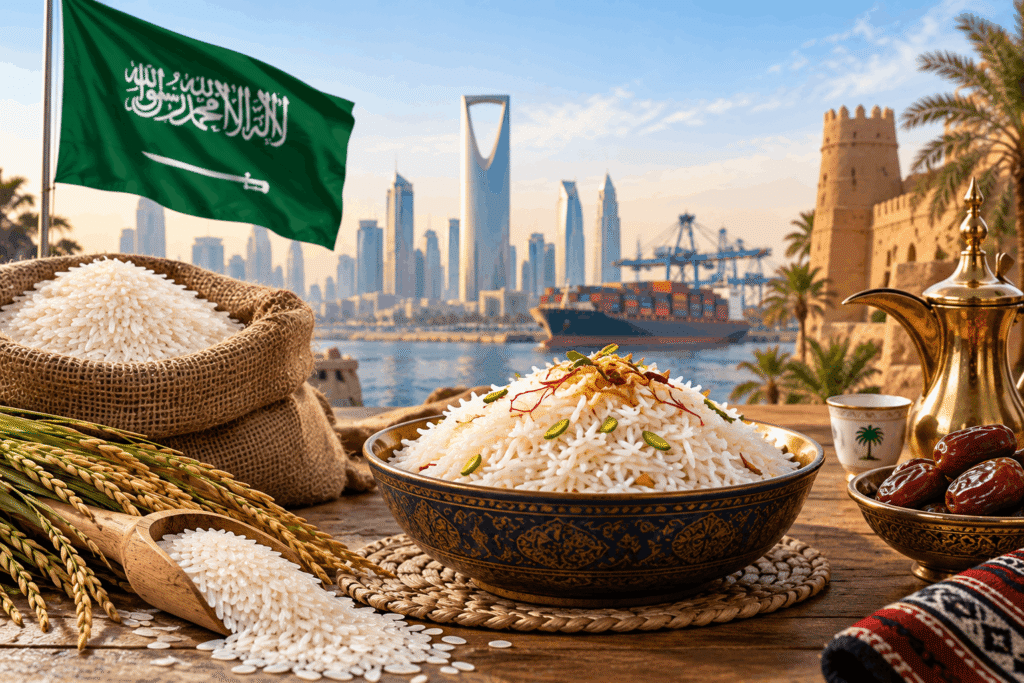
What Makes Long Grain Basmati Rice Saudi Arabia’s Top Choice?
Rice can be a staple in many cuisines. However, for Saudi Arabia, many of the rice dishes feature large rice crops that are grown to remain separate. Kabsa, Mandi and Bukhari are some of the more popular dishes in the country.
Food quality and preferences vary by culture. The way rice is grown and processed affects its smell, taste, and texture.
Basmati rice, when cooked properly, has a delicate flavor and a pleasant aroma that is appreciated in many parts of the world. Basmati rice from certain regions of the world is preferred over others.
Which Basmati Varieties Do Saudi Buyers Request Most?
Saudi importers don’t buy one type of Basmati. They buy the right type for the right kitchen.
- Choose 1121 Basmati Rice for premium retail and five-star catering. It offers the longest commercial grain length available.
- Choose 1509 Basmati Rice for a strong aroma at a lower price point. It fits mid-tier distributors and restaurant chains.
- Choose Golden Sella Basmati Rice for bulk catering and food service. Parboiling extends shelf life and reduces breakage across long shipments.
Review the full range of Basmati rice varieties before you place your next order.
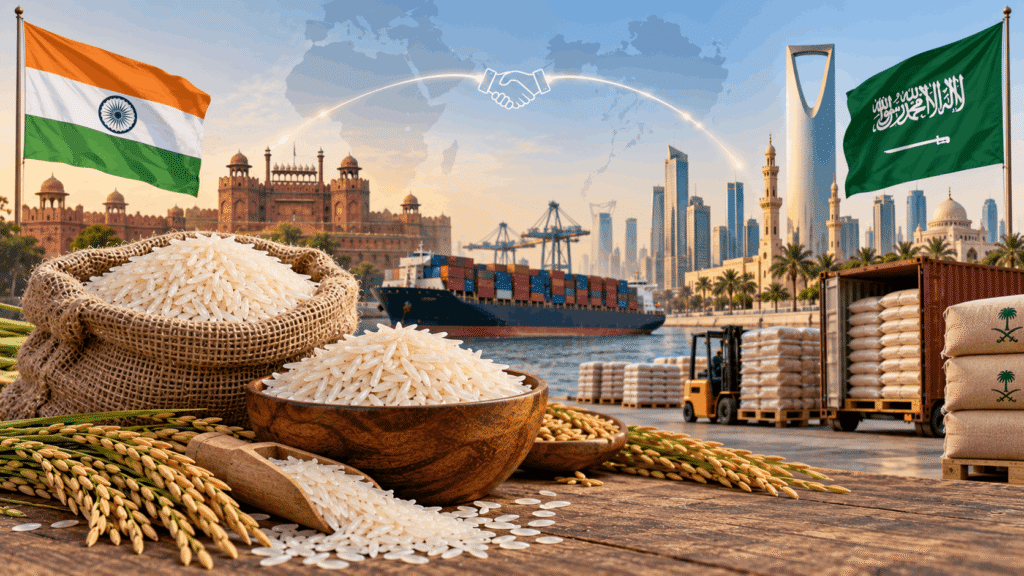
How Does India Meet Saudi Arabia’s Scale of Demand?
Volume matters as much as quality here.
According to APEDA, India exported 6.52 million metric tons of Basmati rice worth US$5.67 billion in 2025–26. No competing origin matches that scale.
Saudi Arabia ranks among India’s top Basmati destinations, year after year.
That consistency builds trust. Trust builds long-term contracts. Long-term contracts protect your margin.
What Should You Verify Before Choosing a Basmati Rice Exporter for Saudi Arabia?
A weak shipment damages more than one order. It damages your reputation with your own buyers.
Confirm these details before you finalize any contract:
- Check the grain length and elongation ratio.
- Verify the aging period. Twelve months or more cooks evenly and stores longer.
- Request pesticide residue compliance documentation.
- Review the broken grain percentage for accurate yield.
- Confirm packaging options that match your retail or food service format.
Buyers focused on strict compliance should review pesticide residue-free rice options before confirming a supplier.
Skip these checks, and you inherit someone else’s risk.
How Does GCDN Rice Support Bulk Buyers Across Saudi Arabia?
For more than 70 years, GCDN Rice has contributed to the agricultural economy of Saudi Arabia by providing the best Basmati rice.
GCDN Rice provides bulk Basmati rice to distributors and retailers in Saudi Arabia. Food service operators can also rely on GCDN Rice for their bulk supply.
GCDN Rice has the capacity to private label Basmati rice for retail customers.
Want the details on our Saudi export process? Review our dedicated page on Basmati rice export from India to Saudi Arabia.
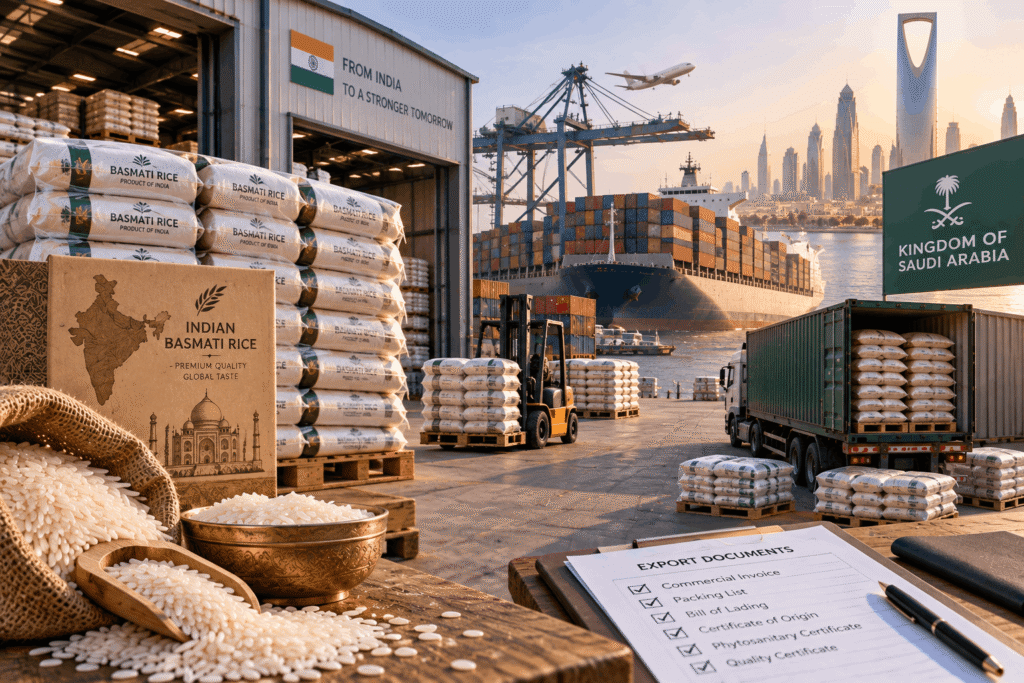
Your Next Shipment Starts With the Right Exporter
Saudi Arabia’s rice demand isn’t slowing down. Its dependence on quality Basmati imports keeps growing.
Buyers who source consistently protect their business. Buyers who source once and hope get left behind.
Contact GCDN Rice to discuss variety selection, bulk pricing, and export timelines built for your market.