

GCDN Rice is an exporter in Delhi with 70+ years in the business. GCDN Rice exports bulk basmati to Turkish importers, distributors and wholesalers. GCDN Rice holds APEDA certification and is able to supply its rice to all Turkish ports including Istanbul, Mersin and Izmir.
The Middle East and Europe rice market consider Turkey to be one of the more important markets. Turkey, although domestic grower of medium grain rice varieties, continues to import the highest quality long grain basmati. Hospitality, processing as well as retail trade warrants the import of basmati.
As a trusted and long-standing basmati rice exporter, buyers in Turkey are most concerned about consistency, documentation and supply of different varieties.
GCDN Rice has been an exporter of basmati rice to several international markets since 1952. GCDN Rice has its operations in Delhi and has its sourcing from the Basmati growing belt of India. GCDN offers a full line of 1121, 1509, PR11, Pusa, and 1401 in bulk and packed formats to meet customer specific needs.
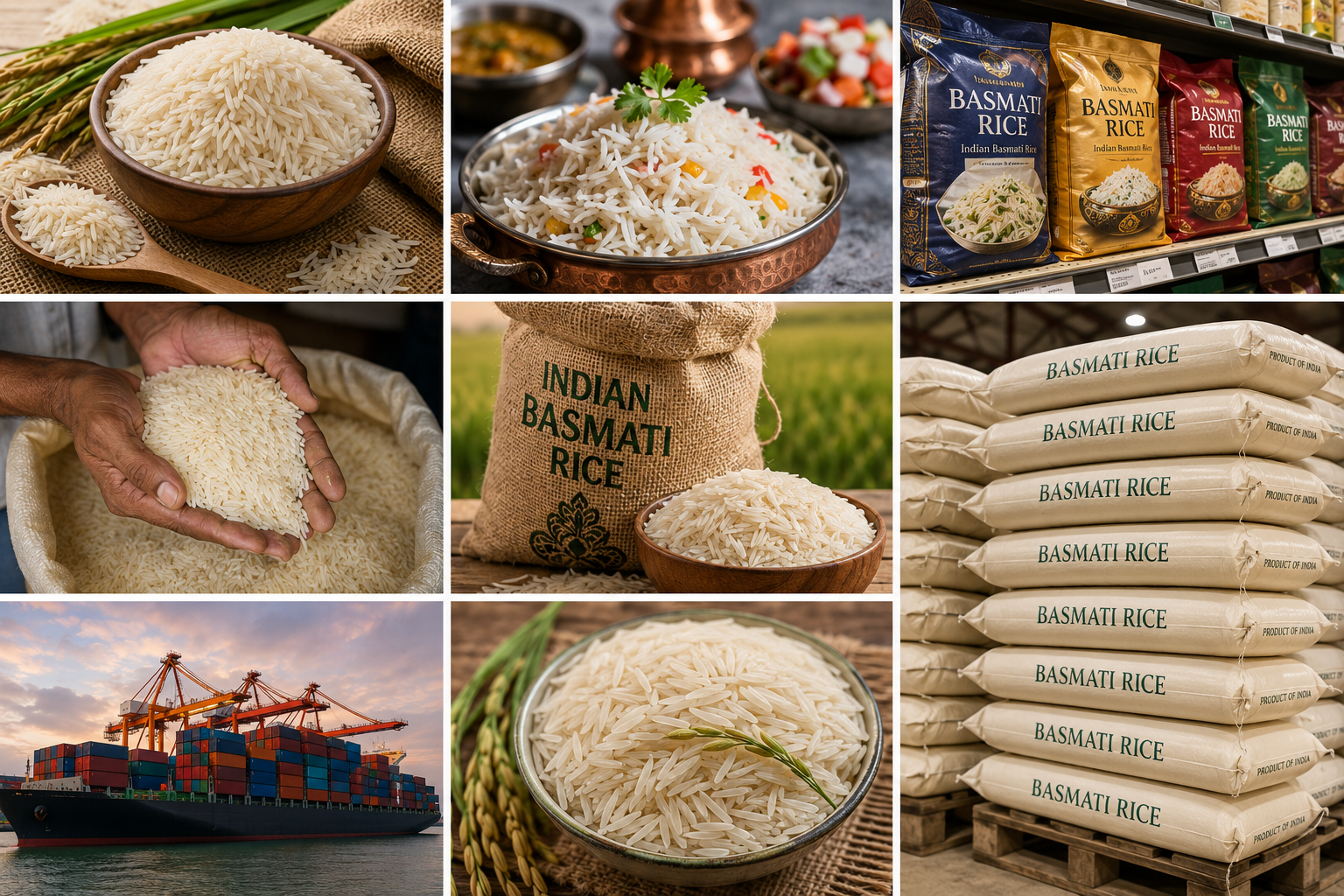
As a rice producer itself, Turkey concentrates paddy cultivation in the Marmara and Thrace regions. According to the USDA GAIN Report (TU2025-0015, May 2025), the MY 2025/26 paddy production in Turkey is estimated at 828,000 MT with the Thrace region forming almost 40 percent of total paddy production and the Marmara region almost 70 percent of the national paddy production.
Turkey’s domestic paddy production, however, concentrates on short- to medium-grain varieties, primarily Baldo and Osmancik, for use in daily household consumptions and traditional pilaf. These varieties are not remotely close to the long-grain Indian basmati, and therefore, domestic paddy production is not capable of fulfilling the long-grain segment.
Turkey’s rice consumption for MY 2025/26 is expected to be 810,000 MT and total rice imports are expected to be 475,000 MT with India ranking as one of the important rice exporting countries. Import of Basmati rice from India during the first five months of MY 2023/24 stood at 24,000 MT and is expected to increase further.
Import demand in Turkey is driven by:
Basmati rice from India accounts for most of the supply of basmati rice internationally. Turkish buyers are looking to Indian exporters for long-grain premium supplies that are not fulfilled by domestic production.
There are many diverse factors that explain Indian basmati rice’s dominance in the premium segment in Turkey.
GCDN Rice supplies the following varieties to Turkish buyers, available in bulk (25kg, 50kg jute/PP bags) and custom-labeled retail packaging. Private labelling is available across all varieties, with packaging in Non-Woven, Jute, Pouch, BOPP, and PP formats.
|
Variety |
Grain Type |
Avg. Cooked Grain Length |
Best Use Case |
Notes |
|
1121 Steam (Raw) |
Extra-long grain, raw/white |
20mm+ |
Premium retail, fine dining, pilaf |
Highest aroma intensity; strongly preferred in Turkish premium retail |
|
1121 Golden Sella |
Extra-long grain, parboiled |
20mm+ |
Institutional catering, food service, bulk hospitality |
Parboiled for nutrition retention; non-sticky; performs well in buffet service |
|
Aged 1121 |
Extra-long grain, raw, aged 12–24 months |
20mm+ |
Luxury retail, specialty restaurant supply |
Extended aging delivers strong 2-AP aroma and low moisture |
|
1509 Golden Sella |
Long grain, parboiled |
18–19mm |
Cost-efficient food service, mid-market retail |
Shorter aging requirement; faster turnaround; competitive price point |
|
PR 11 Golden Sella |
Long grain, parboiled |
17–18mm |
Food processing, institutional bulk supply |
High yield on cooking; stable texture; suited to Turkish processor specifications |
|
1401 & Pusa Basmati |
Long grain, raw/steam |
17–18mm |
Affordable retail, general distribution |
Entry-level basmati price point; consistent specs; wide availability |
|
Pesticide-Residue-Free (PRF) Range |
Available across 1121 Steam & Sella |
Varies by variety |
Premium and export-sensitive retail |
Tested to EU MRL standards; full documentation available on request |
All varieties are available in FCL (20-foot and 40-foot container) and LCL shipments, with APEDA-certified quality testing documentation provided per consignment.
In a spacious warehouse, rows of burlap sacks filled with grain are stacked high, creating organized aisles under natural light filtering in from above.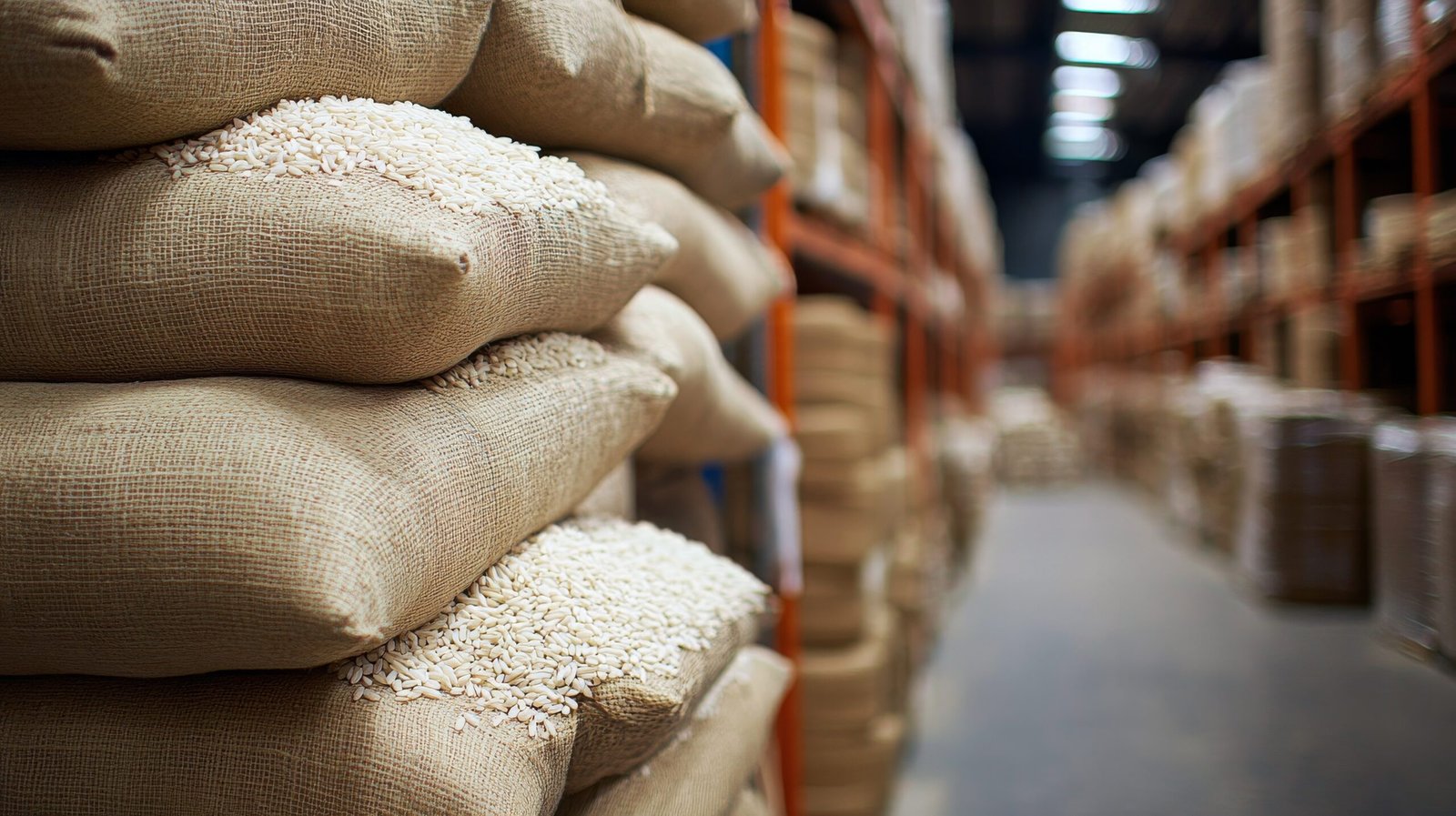
Turkish importers require a specific documentation package at port clearance. GCDN Rice prepares and coordinates all of the following as standard practice — every document is prepared and shared before the vessel departs, so your customs broker in Turkey has full paperwork in hand before the container arrives.
GCDN Rice ships on FOB (Free on Board), CIF (Cost, Insurance & Freight), and CNF (Cost and Freight) terms, depending on buyer preference and contract structure.
Transit time from Indian export ports (Mundra, Nhava Sheva/JNPT, or Kandla) to Istanbul, Mersin, or Izmir is approximately 20–28 days, depending on routing, vessel availability, and seasonal port conditions. GCDN Rice coordinates with freight forwarders who maintain established Turkey shipping corridors.
GCDN Rice ships to Turkey’s primary import ports, aligned with the country’s major population centers and distribution networks:
We also coordinate shipments to additional Turkish ports on request and can advise on the most cost-effective routing based on your warehouse location and distribution plan.
Turkish importers evaluate suppliers across a short, practical list of criteria: supply consistency, documentation reliability, variety range, and the ability to scale. GCDN Rice addresses each directly.
70+ Years of Export Operations
Established in Delhi in 1952, GCDN Rice has over seven decades of continuous basmati export experience. That operational depth means established banking relationships, tested logistics workflows, and a deep understanding of how to navigate documentation requirements across international markets — including Turkey.
Direct Mill Sourcing
GCDN Rice sources directly from basmati-growing regions in Punjab, Haryana, and Uttar Pradesh, bypassing intermediary traders. Direct sourcing provides tighter quality control, better pricing, and supply chain transparency that buyers can verify.
Private Labeling and Custom Packaging
GCDN Rice offers private-label packaging for Turkish distributors and retailers who want to sell under their own brand. Packaging customization includes logo placement, pack weight configurations (1kg, 2kg, 5kg, 10kg consumer packs or bulk bags), and Turkey-specific regulatory labeling requirements. Packaging formats include Non-Woven, Jute, Pouch, BOPP, and PP.
Bulk Supply Capability
GCDN Rice handles full container load (FCL) shipments as standard, with the operational capacity to manage multiple containers per order cycle. For Turkish distributors managing seasonal demand peaks — Ramadan, Eid, and year-end retail — GCDN Rice can coordinate advance production scheduling to ensure supply continuity.
Export-Ready Certification Stack
All certifications — APEDA, Halal, phytosanitary, fumigation, certificate of origin — are prepared in-house as part of standard shipment processing. Turkish buyers do not need to chase multiple third parties for documentation.
Consumer Brand Credibility
GCDN Rice also markets rice under its own consumer brand, Waada, which provides an additional signal of brand-level quality investment — relevant for Turkish importers who want to assess how the exporter manages product quality for end consumers.
What is the minimum order quantity (MOQ) for basmati rice exports to Turkey?
GCDN Rice’s standard MOQ for export to Turkey is one full container load (FCL) — approximately 24–25 metric tons in a 20-foot container or 22–23 metric tons for bagged product in a 40-foot container. LCL (less-than-container-load) options can be discussed for first trial shipments.
How long does shipping from India to Turkey take?
Transit time from Indian export ports (Mundra, JNPT, or Kandla) to Istanbul, Mersin, or Izmir is approximately 20–28 days under normal routing and vessel schedules. Seasonal port congestion may extend this marginally. GCDN Rice provides estimated arrival windows at booking confirmation.
Does GCDN Rice provide Halal certification?
Yes. Halal certification from an accredited Indian certifying body is available for all basmati varieties and is provided as part of the standard export documentation package for Turkish buyers.
What quality certifications does GCDN Rice hold?
GCDN Rice holds APEDA registration and exports under APEDA’s Basmati Rice Inspection Certification standards. Pesticide-Residue-Free (PRF) documentation is available for specific varieties tested to EU Maximum Residue Levels (MRLs). Additional certifications can be discussed based on buyer requirements.
Can GCDN Rice supply private-label packaging for Turkish retail distribution?
Yes. GCDN Rice offers a full private-label service, including custom logo placement and buyer-specified pack sizes. Lead time for initial custom packaging runs is approximately 2–3 weeks from design approval.
What Incoterms does GCDN Rice offer for Turkey shipments?
GCDN Rice ships on FOB, CIF, and CNF terms. CIF and CNF — inclusive of freight and insurance to Turkish port — are available for buyers who prefer a landed-cost pricing structure. Preferred terms are agreed at the contract stage.
Which basmati variety is most popular with Turkish buyers?
1121 Golden Sella is the most commonly requested variety for Turkish food service and institutional buyers due to its non-sticky texture, cooking yield, and parboiled nutritional profile. 1121 Steam (raw) is preferred for premium retail. GCDN Rice can advise on variety selection based on your specific end-use channel.
Does GCDN Rice offer product samples before a full order?
Yes. GCDN Rice can dispatch courier samples of requested varieties prior to contract finalization. Sample requests typically ship within 5–7 business days of confirmation. Contact the export team directly to arrange.
Turkish importers, distributors, and wholesalers can contact GCDN Rice’s export team directly for: