
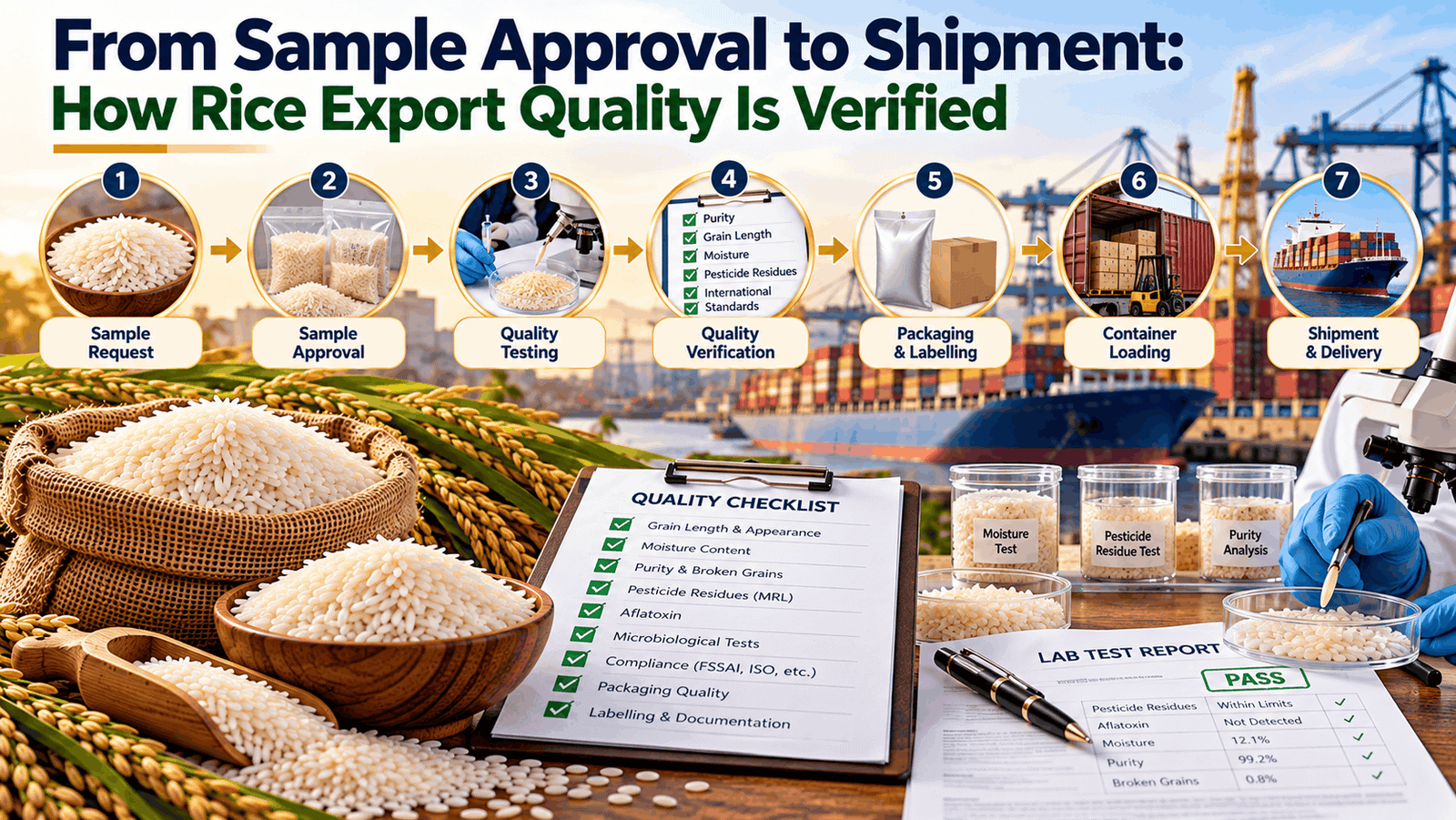
Rice export quality verification happens by checking samples testing in labs looking at the product physically and checking the papers before any shipment leaves the port. Exporters check the length of the rice how water it has how many pieces are broken and how clean it is compared to the samples the buyer approved. Reputable basmati rice companies do this in steps. When they buy the rice when they process it and before it is sent out. To be sure what is sent is what was agreed on.
International rice buyers do not often get to see the fields where the rice is grown the places where it is processed or the places where it is stored. What they do see is a sample. That sample is what is used to judge the shipment. The difference between a company that is trusted and one that is not often comes down to how that sample is followed.
For those who buy rice from India understanding this checking process is just as important as talking about the price. A shipment that does not match the sample can cause delays, arguments and damage to the company’s reputation when the rice gets to the store. This article explains how quality is checked from the moment a sample is approved to the moment a container is closed and what buyers should look for when choosing a supplier.
How Is Rice Export Quality Verified from Sample to Shipment?

Checking the quality of rice exports is not one step. It is a series of checks done during buying, processing, storing and loading.
The process usually has:
• Sample approval. The buyer looks at a sample and says it is okay. This sample shows the length of the rice the color, the smell and how old it is.
• Sourcing materials. Rice is bought according to the grades that were agreed on.
• Processing and sorting. The rice is cleaned, polished and sorted so that it matches the sample that was approved.
• Lab testing. Labs check how much water is in the rice how many pieces are broken how much other things are in it and if there are any chemicals left.
• Pre-shipment inspection. Someone checks the packed rice to make sure it matches the sample before it is loaded.
• Paperwork and certificates. Papers like phytosanitary certificates, fumigation papers and quality reports go with the shipment.
Each of these steps makes sure what is promised is what is delivered. If any step is skipped there is chance that the rice is not what was expected when it arrives.
Why Does Sample Approval Set the Standard for the Entire Order?
The sample that is approved is the point of reference for the order. Every check that comes after. At the mill in the lab at the port. Compares the rice to that sample not to an idea of what rice should be.
This matter because basmati rice can be different depending on where it comes from how long it has been. What kind of rice it is. A sample of 1121 basmati that’s 12 months old is different from one that is 24 months old in how long the grains get when cooked and how it smells. If the sample that was approved has grains and a strong scent the rice that is sent must have the same features not just be called basmati.
Buyers should get a sample that is sealed and dated and both sides keep a copy. This helps avoid arguments because both sides can look at the same physical sample instead of just descriptions.
What Does the Rice Quality Verification Process Look Like Step by Step?
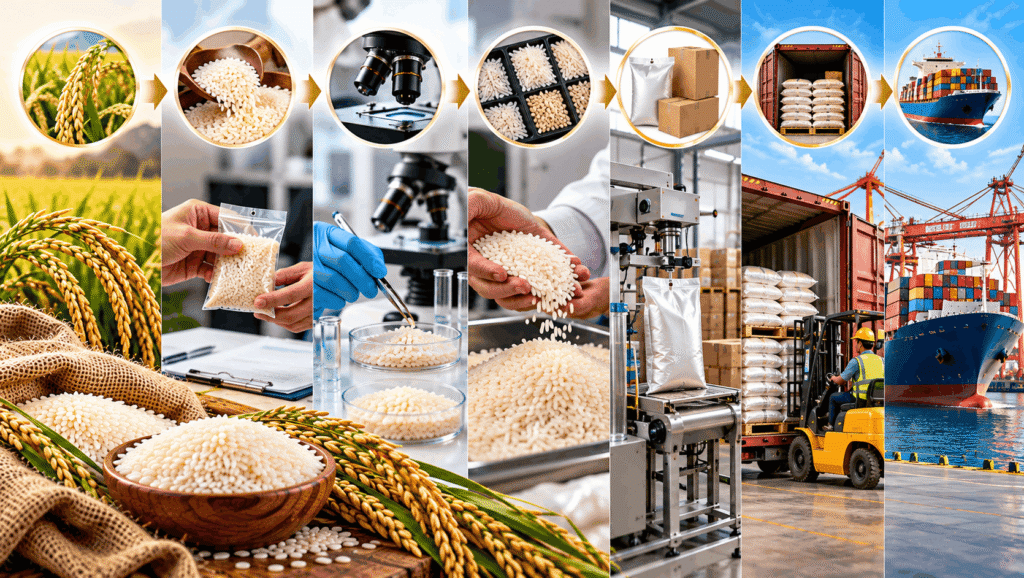
A good basmati rice exporter makes sure quality is checked at every step of the process not at the end.
1. Checking when buying. The rice is checked for the type, how much water it has and any bad bits before it is processed.
2. Processing. The rice is cleaned, polished and sorted so that it matches the sample that was approved. Machines are used to find color changes that people might miss.
3. Lab tests. Before the rice is packed samples are checked for:
• How much water is in the rice
• How many pieces are broken
• The average. How even the lengths are
• If there are any damaged, white or not fully-grown pieces
• How much other things are in the rice
4. Pre-shipment inspection. A company that is not tied to the seller or someone chosen by the buyer takes samples from the packed rice and compares them to the sample. This is very important for buyers or big orders.
5. Fumigation and getting papers. The rice is treated to keep pests during the trip and it is checked by the right authority to get the papers needed to leave.
6. Checking papers. The papers like lab results, phytosanitary papers and packing lists are checked to make sure everything is correct before the bill of lading is made.
Each of these steps leaves a paper trail. Buyers should ask for copies of the lab reports and inspection papers as a part of doing business not as something special.
What Should Buyers Check Before Confirming a Bulk Rice Order?
International buyers. Like stores, food companies or hotels. Face different risks than local buyers. If a problem is found after the rice is shipped it is more expensive to fix.
Before saying yes to a rice order buyer should check:
• If the supplier can show that the rice was tested against the exact sample that was approved
• If the supplier will share lab reports for moisture, broken rice and purity
• If the supplier allows someone else to check the rice before it is sent or only checks it themselves
• If the supplier keeps the quality each time they send rice or if the quality changes over time
• If the papers like phytosanitary and fumigation certificates are given on time and correctly
Choose a supplier that allows third-party checks if you care more about making sure the rice is the same each time than about saving money. Choose a supplier that shares lab results if you need to show where the rice came from for your stores or your brand.
How Is Demand for Verified, High-Quality Basmati Rice Changing in International Markets?
More people around the world are asking for rice that is known to be good. This is happening in places like the Middle East, Europe, North America and parts of Africa. These buyers want proof that the rice’s good, not just a good price. Stores and brands that sell their products have their own rules about food safety and labelling so they need to know that the rice they buy is what it says it is.
This change helps rice sellers who can show that they make rice the same way each time and have papers to prove it. This is more important than offering a lower price. As the rules about food safety get stricter being able to show that the rice is good is becoming something all buyers expect, not something that makes a seller stand out.
What This Means for Your Next Rice Import Order
Approval of the sample is the start. The real test of a basmati rice seller is if the sample stays the same through buying, processing and sending. Buyers who ask for lab reports, who want third-party checks and who ask for a sealed sample are in a better position than those who just trust the seller.
Before you place your big order ask the seller to explain how they check the quality step by step. A seller who is sure, about their quality will not mind showing you how a sample becomes a full shipment.