

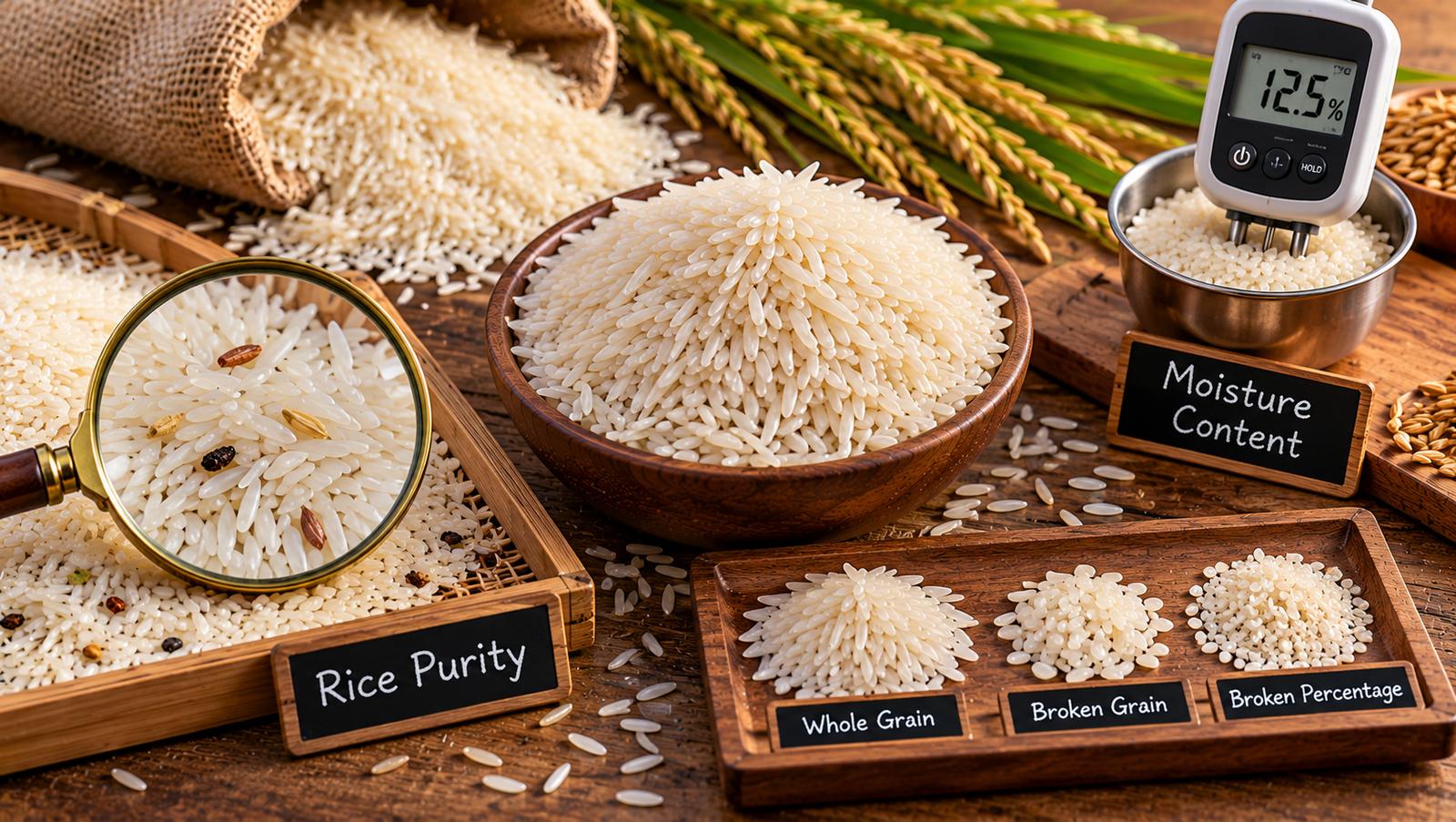
The quality of a shipment of rice is determined by three metrics: rice purity, moisture content, and broken grain percentage. Purity determines the extent of admixture and foreign matter in the rice; moisture content determines the stability of the rice and its shelf life; and broken grains affect the visual appeal and price of the rice. Taken together, these three metrics help specify a rice purchase contract.
International rice importers, distributors and private label rice brands may not understand these three terms, but they appear on almost every specification sheet or purchase contract. Many buyers accept supplier stated numbers without knowing what they really mean or how it affects the bottom line.
Getting these parameters wrong can mean containers are rejected at the port, spoiled rice in a warehouse, or a finished product that does not meet customers’ expectations. Each of these parameters is defined and tested in this guide, and benchmarks are provided for buyers’ sourcing decisions.
What is rice purity and why is it important to buyers?
The term rice purity refers to the percentage of sound, clean rice grains in a shipment, and is free from foreign matter, weed seeds, stones, rice husk, chaff, and other non-rice materials. A shipment of rice is considered pure if the purity level is 98% or more. A purity level of 95% or less indicates that the rice was inadequately processed or cleaned.
Low purity creates issues with:
Food safety compliance: Foreign matter can result in rejections at custom/retail inspections.
Milling yield: Impurities reduce the quantity of usable rice.
Brand reputation: Consistent, debris-free product is expected by retailers and restaurants.
For private-label food brands, and supermarkets in particular, purity is not negotiable. One contaminated batch can impact years of effort to build a relationship with a retailer. Reliable exporters conduct multiple cleaning and sortex (optical sorting) stages and test each lot before packing, and should be able to provide a Certificate of Analysis upon request.
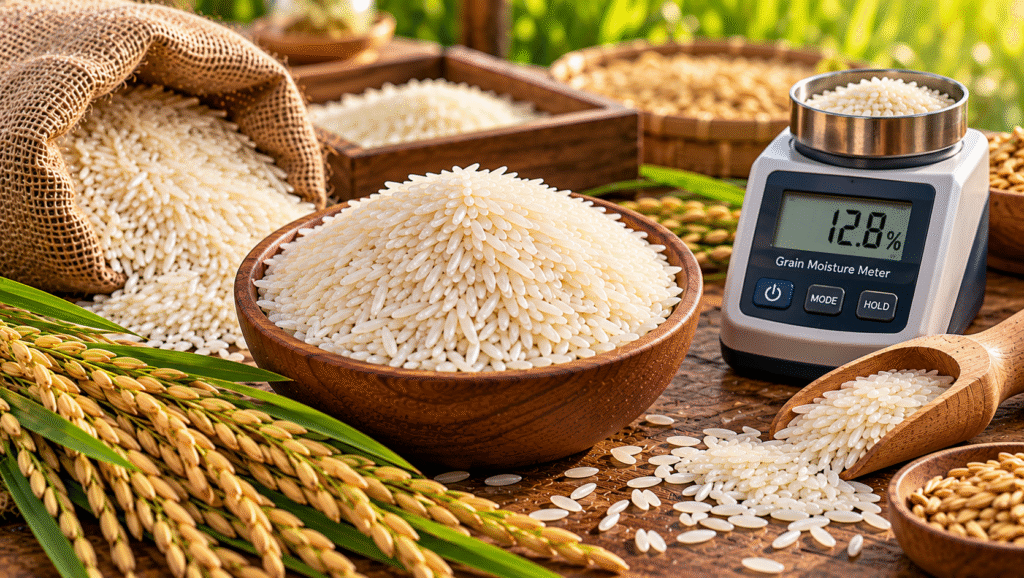
What is the ideal range of moisture content of rice, and how is it measured?
Decision criteria: For longer distance shipments and rice storage with greater potential for spoilage, the 12% moisture target presents less risk. The 13% moisture target would be more appropriate for rice shipment in a shorter supply chain and turnover that allows for some time for the rice to regain some of its texture and cooking quality.
Moisture content has a negative impact on trade. Since rice is frequently traded by weight, the water weight in rice effectively results in a buyer paying for water instead of the rice. To reduce this cost to the buyer, rice suppliers test the moisture content of rice at all stages of shipment and rice procurement, and other intermediary stages, to disclose the hidden cost to the buyer.
What does broken grain percentage mean for rice quality grading?
Broken grain percentage is one factor in the international price and quality grading of rice. It is determined by the proportion of rice that is fractured during harvesting and/or milling. International trade price and quality grading of rice is based also on other factors like the proportion of foreign material in the rice, rice purity, rice color, rice whiteness, and the relative hardness of the rice.
Common grading tiers include:
| Grade | Broken Grain % | Typical Use |
| Extra Long Grain / Premium | 1% or less | Premium retail, hospitality, export to discerning markets |
| Standard Grade | 5% | General retail and food service |
| Economy Grade | 15–25% | Bulk catering, processed food manufacturing |
An offering with a lower broken grain percentage is generally more valuable, because grains with the entire bran layer intact cook more evenly, hold their shape better, and look better when presented on a plate. Appearance and presentation can be important in the hospitality industry, especially when taste can’t be experienced prior.
Decision criteria: If your product is for the retail or fine dining market, or for export to markets that favor visual consistency, select a broken grain percentage that is 1% or lower. For other markets, such as bulk or mass catering, par-boiling or other processing, or the production of prepared or packaged food, where look and appearance don’t matter, you can select an economy grade.
Breakage generally occurs during the milling process because of speed, or because of improper calibration, and/or mishandling during transport. Improving the milling and loading processes and creating infrastructure to improve and/or modernize mills helps lower breakage. Exporters that do this generally have a lower breakage rate, which is worth checking during a supplier evaluation.
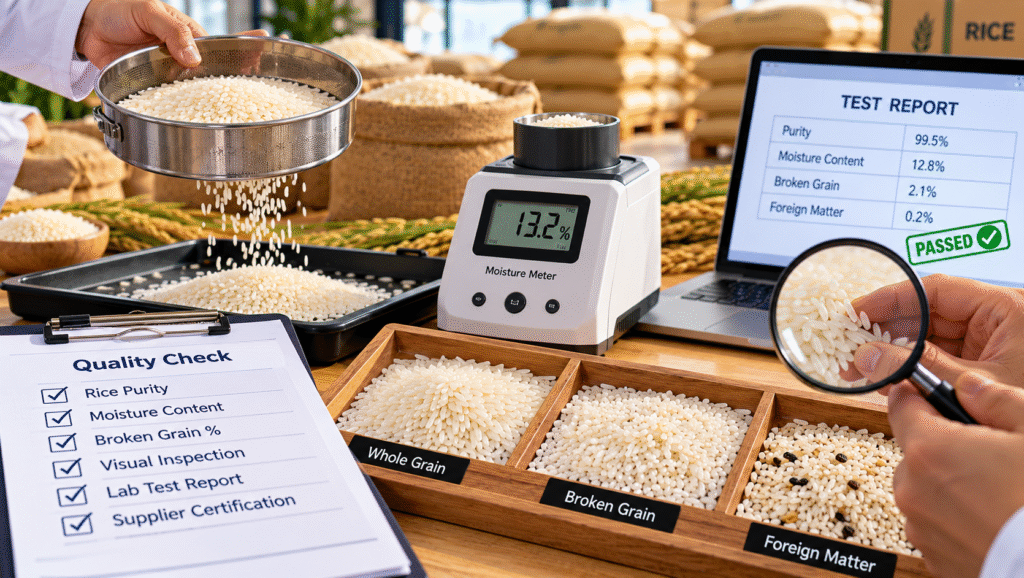
What measures can buyers take to confirm these specifications?
Specification sheets are only as reliable as the testing behind them. Before confirming an order, buyers should request the following from rice exporters:
- A recent certificate of analysis to determine purity, moisture and broken grain percentage.
- Pre-shipment inspection reports from a third party.
- Sample lots for testing, if possible.
- Clear contract language to define tolerance limits and the remedies for non-compliance.
GCDN Rice, a Delhi-based exporter with over 70 years of rice processing experience, is known to adopt similar quality control processes for its Basmati and non-Basmati rice, as well as for pesticide residue-free rice. This process discipline is what distinguishes dependable, long-term suppliers from one-off transactional sellers.
Using measurable quality standards to make sourcing decisions
Moisture content, broken grain percentage and purity are not esoteric aspects of rice. They are standard specifications to determine if the rice shipment is in sellable condition, complies to regulatory requirements, and fulfill the expectations of the end customer be it supermarket shelf, kitchen of a restaurant or a private label packaging line.
Buyers who are aware of the above specifications can compare suppliers based on qualities rather than prices, and structure contracts to reduce the risk of financial loss in case of quality discrepancies.
Prior to issuing your next purchase order, ensure your supplier provides you documentation of testing of all the three parameters, and provide you sample verification, if any. You need to take this small step to prevent large financial losses when the shipment is dispatched.