


India exports long grain Basmati rice to more than 150 countries. The Middle East, the United States and Europe lead the demand. Buyers must check grain length, aging period and pesticide compliance before any shipment is made. Sourcing from an established Indian exporter ensures better quality fair pricing and reliable supply over the long term.
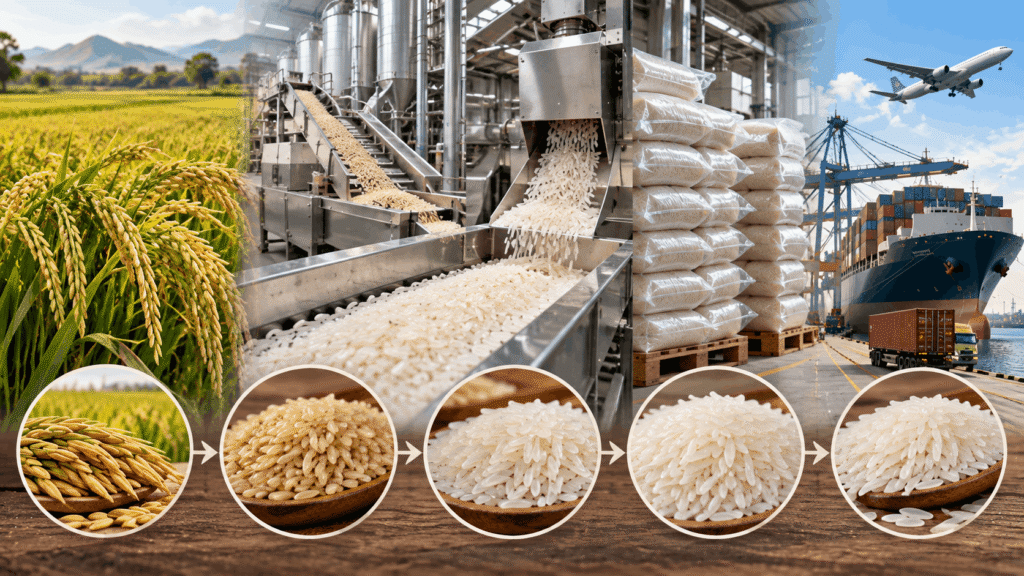
Think that exporting Basmati rice is a simple trade? Think again. Every shipment goes through quality checks. There is paperwork, documentation and complex logistics involved. Only after all these steps is the rice ready to arrive at your warehouse.
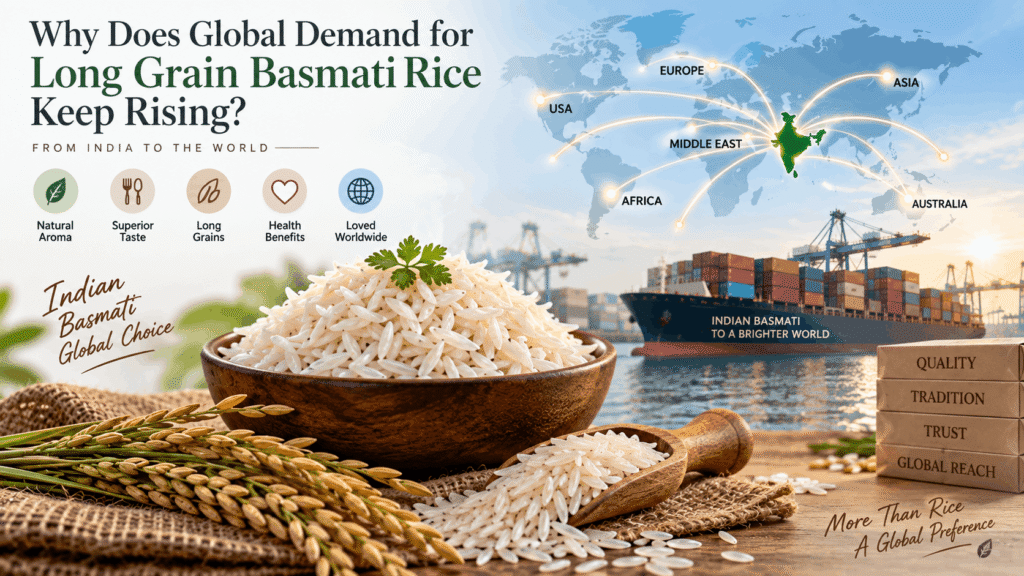
India controls the Basmati market. According to APEDA India exported 6.52 million tons of Basmati rice in 2025–26. The value of this export was US$5.67 billion. No other country comes close to matching both the volume and consistency of India’s Basmati exports.
This guide explains how grain Basmati rice travels from Indian farms to international markets. You will learn about the factors that shape demand. You will discover which Basmati varieties matter most. You will find out how to choose a bulk Basmati rice supplier you can depend on.
Why Does Global Demand for Long Grain Basmati Rice Keep Rising?
Long grain Basmati rice has an appeal. It has an aroma. It stretches when cooked. It offers a taste that other rice simply cannot match. Home cooks and professional kitchens both value rice that stays separate after cooking. They also appreciate how well it takes on spices and sauces.
Some countries have little land suitable for growing rice. The Gulf region for example imports all of its rice needs. In Europe and North America demand comes from Asian communities. These communities cook Basmati rice regularly. At the time premium grocery stores and upscale restaurants also drove sales.
Demand does not. Fall with seasons. It stays steady. It is structural. That makes long grain Basmati rice a smart choice for buyers who need supply year after year.
What Basmati Varieties Do International Buyers Request Most?
Not all Basmati rice varieties are the same. Each one has grain length, aroma strength and price. Buyers choose based on what they need.
1121 Basmati Rice is the grain available in commercial production. This variety elongates after cooking. It is often requested by premium retailers and high-end catering services. These buyers value its appearance and superior texture.
1509 Basmati Rice grows faster. Costs less. It still delivers aroma and good texture. It is a choice when buyers want good quality without paying extra for the top tier.
1401 and Pusa Basmati Rice are the most common varieties for everyday use. They offer the Basmati taste at a lower cost. These varieties fit well with supermarket shelves and mid-tier distributors.
Explore the range of Basmati rice varieties available for export. Find the one that matches your needs.
How Does Processing Affect Basmati Rice for Export?
The processing method changes how Basmati rice cooks, stores and performs across shipping routes.
Raw Basmati retains Basmati natural starch structure. Basmati suits buyers targeting home-style cooking.
Steam Basmati undergoes steam treatment before milling. Steam Basmati firms the grain. Reduces breakage during transit, a real advantage on long export routes.
Golden Sella, a parboiled option, extends shelf life and improves consistency across large batches. Bulk buyers and catering operations often choose Golden Sella for Golden Sella advantage.
Choose Raw Basmati for buyers seeking traditional texture. Choose Golden Sella for buyers prioritizing shelf life and yield.
What Quality Checks Should Buyers Confirm Before Shipment?
Quality separates a shipment from a costly mistake. Confirm these factors before buyers finalize an order:
– Check grain length and elongation ratio.
– Verify aroma strength through sampling.
– Confirm moisture content and aging period.
– Review broken grain percentage for yield accuracy.
– Request pesticide residue compliance documentation.
Authentic Basmati carries a scent from the compound 2-acetyl-1-pyrroline. Weak aroma often signals blending or age issues.
Aged rice, typically 12 months or more cooks evenly and stores longer.
Buyers focused on compliance should review pesticide residue-free rice options before confirming a supplier.
What Documentation and Logistics Does Basmati Export Require?
Every shipment needs paperwork. Indian exporters provide certificates of origin, phytosanitary certificates and quality inspection reports for customs clearance.
Import regulations shift by country. Confirm standards with local customs authority before finalizing any order.
Shipping routes typically run from ports like Mumbai and Kandla to destination ports worldwide. Transit time varies by carrier, season and destination.
Factor transit time into inventory planning. Turnover retail operations depend on transit time.

How Should Buyers Choose a Bulk Basmati Rice Supplier?
Your sourcing decision carries long-term consequences. A dependable exporter protects your margin and your reputation.
- Confirm bulk fulfillment capability.
- Verify direct sourcing from India.
- Request certification documentation upfront.
- Assess private-labeling flexibility.
Private-label capability matters for distributors building their brand identity. Businesses can source premium Basmati rice packaged under their label instead of a generic supplier mark. Explore private-label Basmati rice options for your market.
GCDN Rice brings over 70 years of rice export experience supplying premium Basmati rice to markets across the Middle East, Europe and beyond. Review GCDN Rices Basmati rice varieties for grain type, processing and packaging options suited to your business.
Building a Supply Chain You Can Depend On
Global markets reward buyers who plan ahead. Match your variety to your customer base. Confirm processing type against your kitchen or retail needs. Verify quality and certification before every shipment.
A consistent supply chain, backed by a trusted exporter turns a recurring import need into an edge.
Sourcing private-label long grain Basmati rice for your market? Contact GCDN Rice to discuss variety selection, packaging and export timelines suited to your business.
Will you keep guessing on grain quality or source, with certainty?