


Indian Rice Export to Oman: A Growing Partnership
India and Oman have a long-standing trade relationship centered on rice and other agricultural products. Oman’s food distributors and other companies in the food service industry rely on rice imports from India. India is home to high quality varieties of aromatic rice. Of the rice varieties, Basmati rice is particularly well suited to the climate of the Indian subcontinent.
As dining trends in the Sultanate shift towards the use of long grain rice, especially varieties with a high rate of amylase, a type of starch, and a good aesthetic appeal due to a long slender shape, the demand for a reliable supplier of Basmati Rice has increased. With this increased demand, many rice processors are motivated to export rice from India to fulfill the requirements of rice distributors in the Sultanate.
With respect to the rice trade, India and the Persian Gulf region in general, have long histories of trade and cultural ties. The current study offers information on rice trade from India to Oman, as well as on various Basmati Rice varieties.
Why Indian Basmati Rice Holds a Dominant Position in Oman
Oman relies on Basmati rice to make many of its well-known dishes like Shuwa and Majboos. For large function rice preparations, Basmati rice is the rice of choice, for several reasons:
- Basmati rice, native to India, has long slender grains that nearly double in length when cooked. The grains remain separate and do not stick together.
- This rice has a distinct nutty aroma.
- One of the main reasons Basmati rice is preferred over other varieties of rice for large scale preparations is that, due to its elongation, one kilogram of rice yields more covered volume as compared to other varieties of rice.
- Basmati rice is also available in different processing methods. Indian millers process the rice in different ways before it is exported. These methods include steam, Parboiled (Sella) and raw processing.
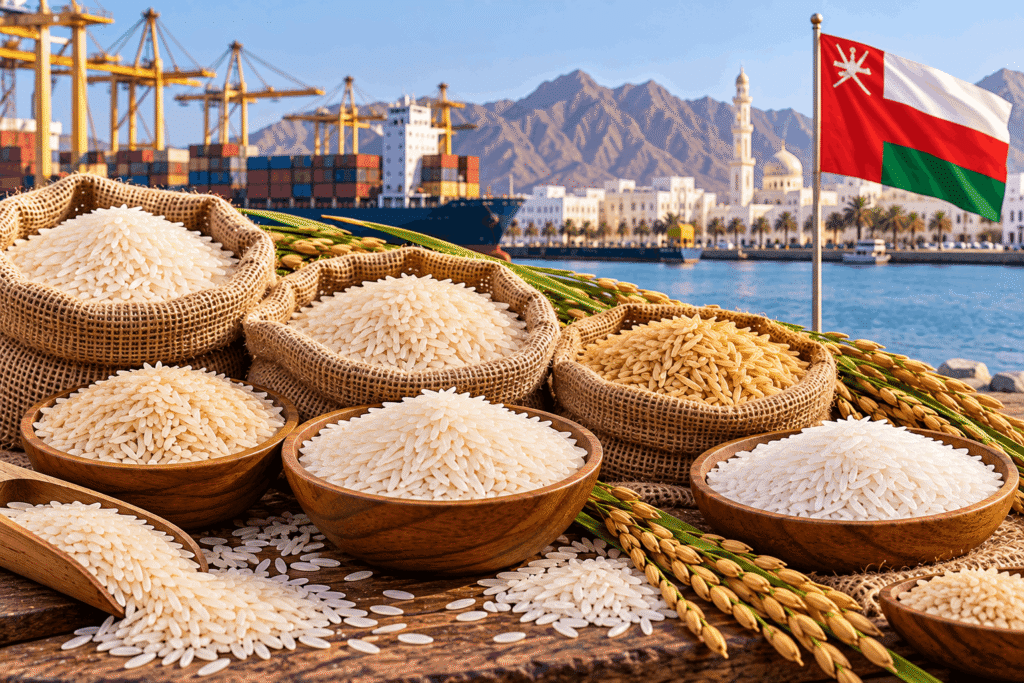
Key Basmati Rice Varieties Supplied to the Omani Market
Identify the right product variation according to your customer segment. For example, a retail customer may want to buy rice for a table, while a customer in the food industry may want rice for a commercial steaming table.
1121 Basmati Rice
With an average uncooked grain length of 8.35 mm to 8.40 mm, 1121 Basmati rice is a preferred choice for numerous high-end products. It has excellent elongation, cooking break-point and tensile strength. It is extremely popular among restaurants, and is also available in retail packs.
1509 Basmati Rice
1509 Basmati rice has a grain length of 8.30 mm to 8.35 mm. It is processed into Steam and Sella rice. Being a fast cooking long grain rice, it is an affordable option for large scale cooking e.g. by institutions and catering.
1718 Basmati Rice
We have introduced 1718 Basmati, a superior variety to 1121 Basmati. The uncooked grain length of 1718 Basmati is 8.30 mm to 8.35 mm. It has improved resistance to various rice diseases. Compared to 1121 Basmati, the cooked grains of 1718 Basmati have a firmer texture. 1718 Basmati is available in the Steam and Golden Sella varieties. The Steam variety is mostly used in the food service sector. Golden Sella is mainly used in institutions and in buffet service.
Traditional Basmati
Traditional Basmati has an uncooked grain length of 7.30 mm to 7.50 mm. Traditional Basmati rice is normally sold in the un-cooked state. Traditional Basmati becomes very soft on cooking and has a rich aroma. It is usually sold at specialty stores and restaurants.
Importance of 1121 Steam Basmati Rice in Commercial Catering
Of all the varieties of basmati rice, the 1121 Steam Basmati rice variety, is the most popular among the B2B (wholesale) customers in Oman. The Steaming process used in the rice makes it resistant to breaking and helps in retaining the grains’ separation even when cooked in large quantities.
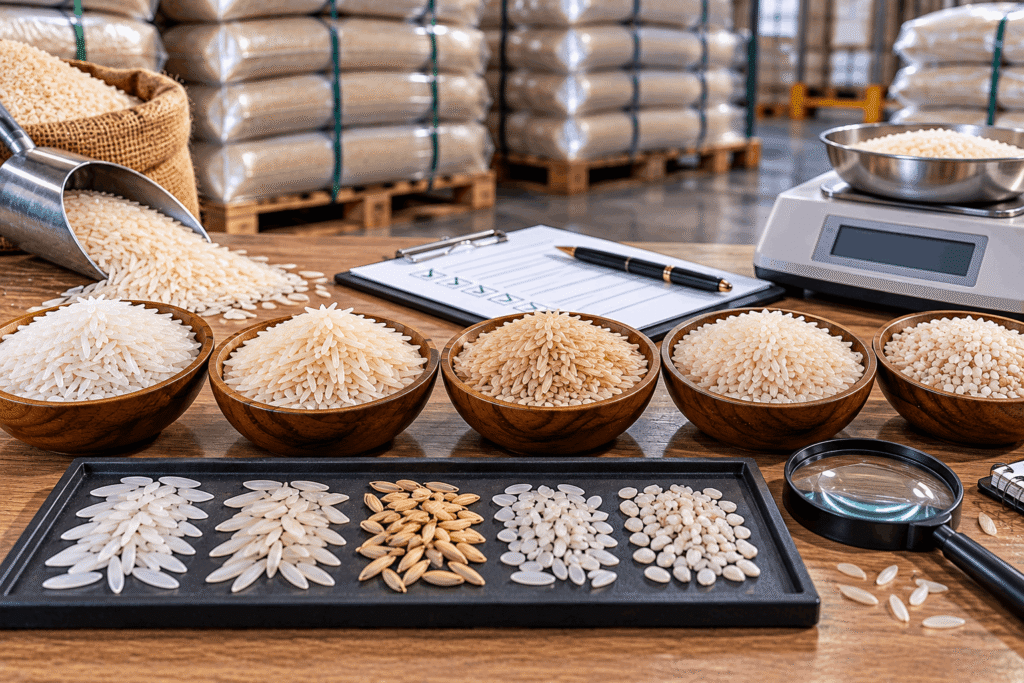
Technical Evaluation: What B2B Importers Must Inspect
To avoid costly quality claims, Commercial buyers in Oman must verify shipments according to the following specifications to justify releasing purchase orders.
Purity & Varietal Mix
There are a number of long grain rice varieties, however basmati rice commands the highest price in the import market. Long grain rice shipments are often blending of different varietals including non-basmati long rice. Verification of purity is essential. DNA tests with a minimum purity standard of 95% meet the verification requirements.
Moisture Content
In order to prevent mold and bacterial growth during shipping, the maximum allowed moisture content of long grain rice is 13%. Long grain rice with a moisture content less than 13% will lose enough moisture to become brittle and break during shipping.
Broken Grain
The allowable percentage of broken grain in long grain rice varies depending on the grade. A 2% broken grain allowance is typical for higher grade rice.
Aging
The natural drying of the grain during storage reduces the natural moisture of the grain and allows volatile oils to become stable. This process takes 9 to 24 months.
Import Regulations and Compliance for Oman
Rice imported through Muscat, Sohar, or Salalah ports is subject to the scrutiny of the MAFWR and other local food safety agencies of the Sultanate.
- Indian Rice Shipments Require Phytosanitary Certificates: Each shipment is required to have a Phytosanitary Certificate issued by the plant protection authorities of India attesting that the shipment does not contain any Quarantine Pests.
- Pesticide Residues: Oman has maximum residue limit (MRLs), and to meet these limits, the exporter has to test the grain/rice in an accredited laboratory.
- Certificate of Origin: This document is required to provide evidence to the Customs Authorities of the GCC, of the agricultural nature of the shipment to allow the customs authorities to levy the correct rate of duty.
- Labeling: Packages of rice or grains imported to the GCC must be labeled in Arabic and/or English to state the name of the rice/grains, the country of origin, the lot/batch, the date of packaging, and the best before / expiration date.
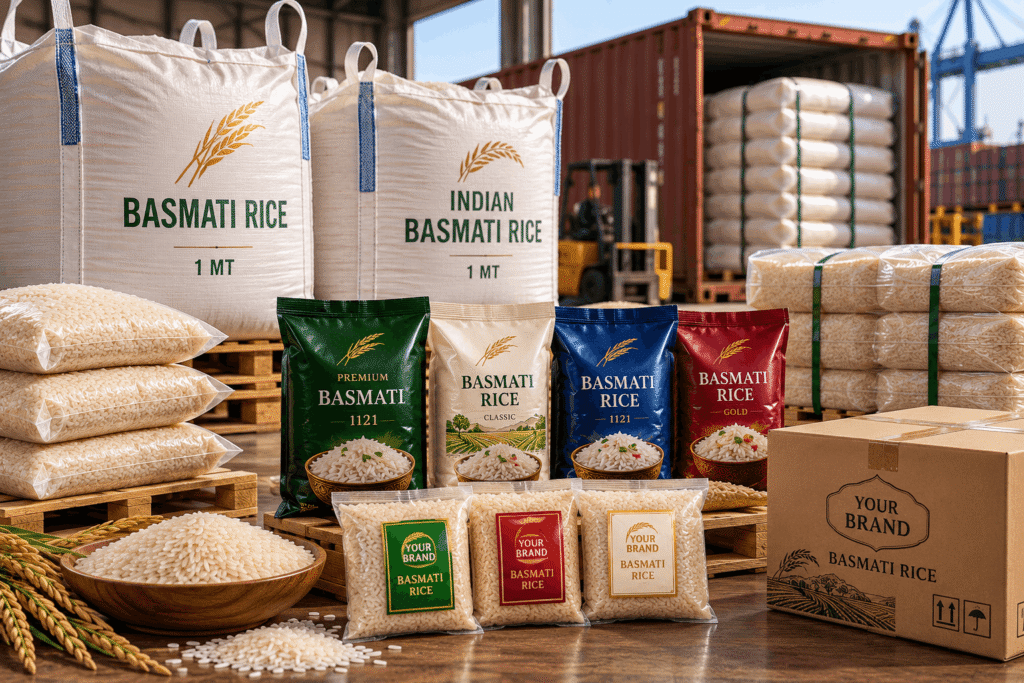
Packaging Solutions for Large Volume and Private Label Clients
Packaging that maintains grain quality during transportation and storage is important. The packages used must also withstand the effects of humidity and high temperatures that are prevalent along the coast of Oman.
Packages made from Non-Woven materials and BOPP (Biaxially Oriented Polypropylene) are good options for packaging grain for the retail market. Printed BOPP offers a good alternative for packaging with high print resolution and shelf appeal compared to other packages.
Grain packaging made from jute and hessian offer the advantage of air-flow. For this reason, they are the preferred packages used in the grain trade.
In humid conditions, the grain is pre-cooked and packed in polyethylene to protect it from the effects of humidity.
Private-label packaging is used by some rice importers in Oman to build local brand names for rice. The rice is imported in the raw form, packaged and shipped by Indian mills.

How to Select a Dependable Basmati Rice Exporter
Establishing a rice distribution network or rice brand involves working with a rice mill that can assure consistent rice supply. When evaluating a potential basmati rice exporter, consider the following:
1. Milling Infrastructure: Ensure the supplier operates modern processing facilities equipped with automated optical sorters, de-huskers, and precise grading equipment.
2. Quality Control Systems: Verify whether the exporter conducts batch-level laboratory testing for moisture, grain length, purity, and chemical residue.
3. Flexible Packaging Capability: Look for suppliers offering artwork support, bilingual labeling, and multiple bag-sizing options for private-label projects.
4. Export Experience: An experienced exporter understands GCC shipping timelines, port requirements, and customs documentation, reducing the risk of demurrage at Omani ports.
Rice mills usually operate in one of two ways. Some rice mills buy rough rice and process it to sell it to other rice mills. Other rice mills process rice to sell to the end consumer. GCDN Rice is a basmati rice exporter that operates its own rice mills. They assure quality by using the latest rice sorting technology to meet export standards and requirements. GCDN can also ensure that shipments are delivered in a consistent and timely manner to customers in the GCC.
Conclusion
The relationship between India and Oman with regard to the trade of Basmati rice is economic and cultural. The Omani rice importers and food service industry have to strike a balance between the best prices and the best quality. Regulatory consolidation and the use of the best grain processing technologies and 1121 steam process methods allow food service industry businesses to have stable and reliable food supply.
Because of its cultural and economic relationship with the Oman food service industry, GCDN Rice has a distinct advantage when marketing, selling, distributing, and supplying bulk Basmati rice to existing and new clients and customers. In addition, GCDN Rice provides product specification and elastic packages to food service industry clients and customers. Besides Basmati rice, GCDN Rice offers other rice varieties and services, including bulk supply, private label and export packaging.