

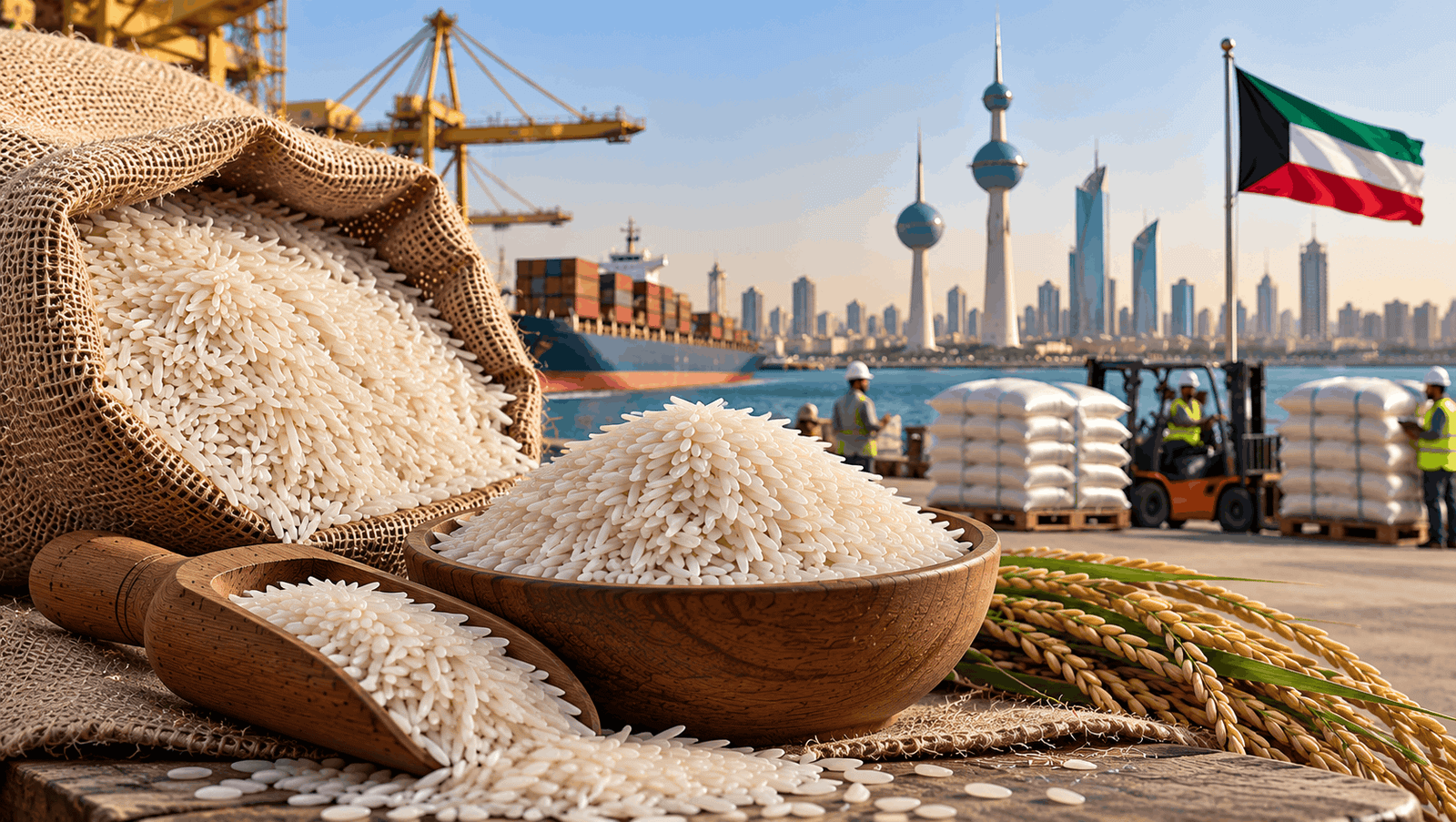
Demand in Kuwait for long grain basmati rice is steadily increasing with the growth of its expat population and import-dependent food sector. In West Asia, about 70% of the total basmati rice exported from India is directed to various countries. For the Indian exporter, Kuwait has also gained importance as a new market in the Gulf region.
Kuwait sources over 90% of its food, and rice is one of the top imports. A significant portion of Kuwait’s population is made up of South Asian and other Middle Eastern expats, resulting in a heightened preference for long grain basmati rice over other varieties. With the perception of ‘what is old is new again’ being true in the food and hospitality sector, importers, distributors, and the hospitality industry in general, are well advised to monitor and understand the reasons for this new found demand for Basmati rice.
Meanwhile, Indian exporters are taking note of new opportunities in the West Asia and Gulf region, given the changing trade policies and new tariffs in Europe and other Western countries. Kuwaitis can expect more competition for Basmati rice among various suppliers, giving them the opportunity to source reliable, consistent, high-quality basmati at the right price.
Why Kuwait Is a High-Demand Market for Indian Rice
Kuwait produces very little of its own food, so rice and other staples must be imported to meet the demand of Kuwait’s supermarkets, hotels and restaurants. Rice is a staple across the South Asian and Middle Eastern cuisines. Thus, for Kuwait, rice is an important import.
The case of Kuwait illuminates this phenomenon further. A large part of the population consists of expatriate workers and their families from India, Pakistan and Bangladesh, to name a few, and other South Asian countries, contributing to the preference of eating traditional dishes from the region such as Biryani, Machboos, and Kabsa, and other similar dishes. This, combined with the lack of demand for other rice varieties in the market, make traditional Basmati rice varieties an everyday food staple.
Data from COMTRADE reported by Sinoimex shows the value of rice imports by Kuwait to be $23.42 million in December 2024, showing a 45.03% decrease from the same month in the previous year. However, this data should be interpreted with caution. This kind of variation in rice imports is normal and expected. It should not be interpreted that there is a decrease in overall demand for rice in Kuwait.
The Most Popular Types of Basmati Rice in Kuwait
Some of the more popular options among Basmati rice varieties in Kuwait are:
1121 Sella: A longer grain variety and the most expensive of all Basmati rice varieties. Due to its superior characteristics, it is a popular choice for large-scale catering.
1509 Golden Sella: Also popular among the masses for its long-grain, superior yield, and lower price point when compared to 1121 Sella.
Traditional Basmati Rice: Aged for a long time to improve the aroma and texture. A favorite among older consumers for its heritage taste.
Each of these varieties caters to a different section of Kuwait’s food market. Premium hospitality groups prefer long grain aromatic rice, which is also prevalent on retail shelves. For importers dealing with a range of customers, a comprehensive product range is vital.
What Drives Kuwait’s Preference for Long-Grain Aromatic Rice
There are several reasons Kuwaiti kitchens prefer long grain aromatic rice. The length of the grains and how much they elongate once cooked reflect a rice’s quality. Long grains signify a better product. This is particularly important for a biryani or pilaf dish where the quality and presentation of the rice is intertwined with the taste. A rice’s aroma is key too and the natural aroma of aged Basmati rice is what helps distinguish a dish.
A rice’s texture post-cooking also plays a role. For Gulf and South Asian cuisites, the rice is to hold its shape and provide body to a dish, along with meats, spices and veggies. This is particularly important for a non-sticky, fluffy rice. Lastly, a rice supplier also needs to take into account the practical aspect of a consistent supply. Kuwait’s larger hotels, restaurants and retailers need large shipments at steady intervals, and reliable logistics is a determinant in a supplier’s success.
What Buyers and Importers Should Know Before Sourcing
A price per ton is not the only consideration when sourcing Basmati rice for Kuwait. This could determine a smooth business relationship or an inconvenient and bumpy supply chain.
Choose a variety based on end use. If your business is focused on hospitality and catering, the cooking consistency of 1121 Sella may give you an edge over 1509 Golden Sella in terms of cost savings. If your clientele is price sensitive, 1509 Golden Sella may be the better variety.
Get documentation and certification ready early. If your shipment is headed to Kuwait, make sure your supplier has export-ready documentation and food safety certifications.
Inquire about packaging flexibility. Private label and retail brands may have specific requirements for rice packaging (i.e. BOPP, jute, non-woven, PP, and other types of packaging) and branding for the Kuwaiti market.
If you’re targeting health-conscious clientele or export-sensitive clientele, think about pesticide residue-free options to meet the growing trend for cleaner label rice in the Gulf region.
India’s Export Landscape Shifting Towards The Middle East
Basmati rice from India continues to dominate the global market. Trade data for the recent financial year (2024-25) indicates the integral role that West Asia plays in this trade. According to APEDA, Basmati rice exports from India during 2024-25 were 60.65 LMT worth US$ 5,944.49 million. West Asia accounted for approximately 70% of the total exports, with Saudi Arabia, Iran and Iraq accounting for around 50% of the total shipments.
This is clearly concentrating as Indian exporters respond to higher tariffs in some Western markets by shifting their focus to the Gulf. Kuwait, as part of the West Asian trade corridor, can expect more competition and a wider choice of suppliers and offers as a greater number of exporters direct their attention to the Gulf.
For companies in Kuwait, this means it is a good time to assess their supplier relationships, before the competition heats up. Businesses that form early sourcing relationships will be in a more advantageous position to obtain the best prices and quality, as competition increases.
Sourcing Basmati Rice From Kuwait Trade Corridor
Kuwaiti shoppers are largely familiar with Basmati rice and consider it as a good value addition to their meals. As such, sourcing Basmati rice in Kuwait can be an easy choice. GCDN Rice has a rich history of manufacturing and exporting rice and other food grains since 1952. Having established its operations in Naya Bazaar, Delhi, the company has a rich heritage and experience in the rice business and export. The company manufactures and exports a wide range of Basmati rice and Non-Basmati rice, and rice that has no pesticide residue, among others.
For distributors, importers and private-label rice manufacturers targeting the Kuwait market, GCDN Rice provides private labeling of rice in various pack styles that range from non-woven to jute bags, BOPP and PP bags, among others. You can access more information about GCDN Rice’s private labeling of Basmati rice for Kuwait here.
Opportunity in Kuwait’s Rice Market
With the large population of Kuwait reliant on rice imports due to a lack of rice production locally, coupled with the preference for long grain aromatic rice, Kuwait has become a strategic market. With Indian exporters focusing on West Asia and the Gulf, distributors and importers in Kuwait are able to source rice from other partners and have the opportunity to establish good, long term partnerships, before competition increases.
The fundamentals for sourcing rice remain the same, regardless of the business. For a retail business, focus on the quality of the grain and ensure documentation is in order. For a restaurant business, or a wholesale business, focus on the quality of the grain and ensure the supplier is able to meet the volume required. Focusing on the fundamentals will help businesses in the long run, to meet the consistent demand for Basmati rice in Kuwait.