

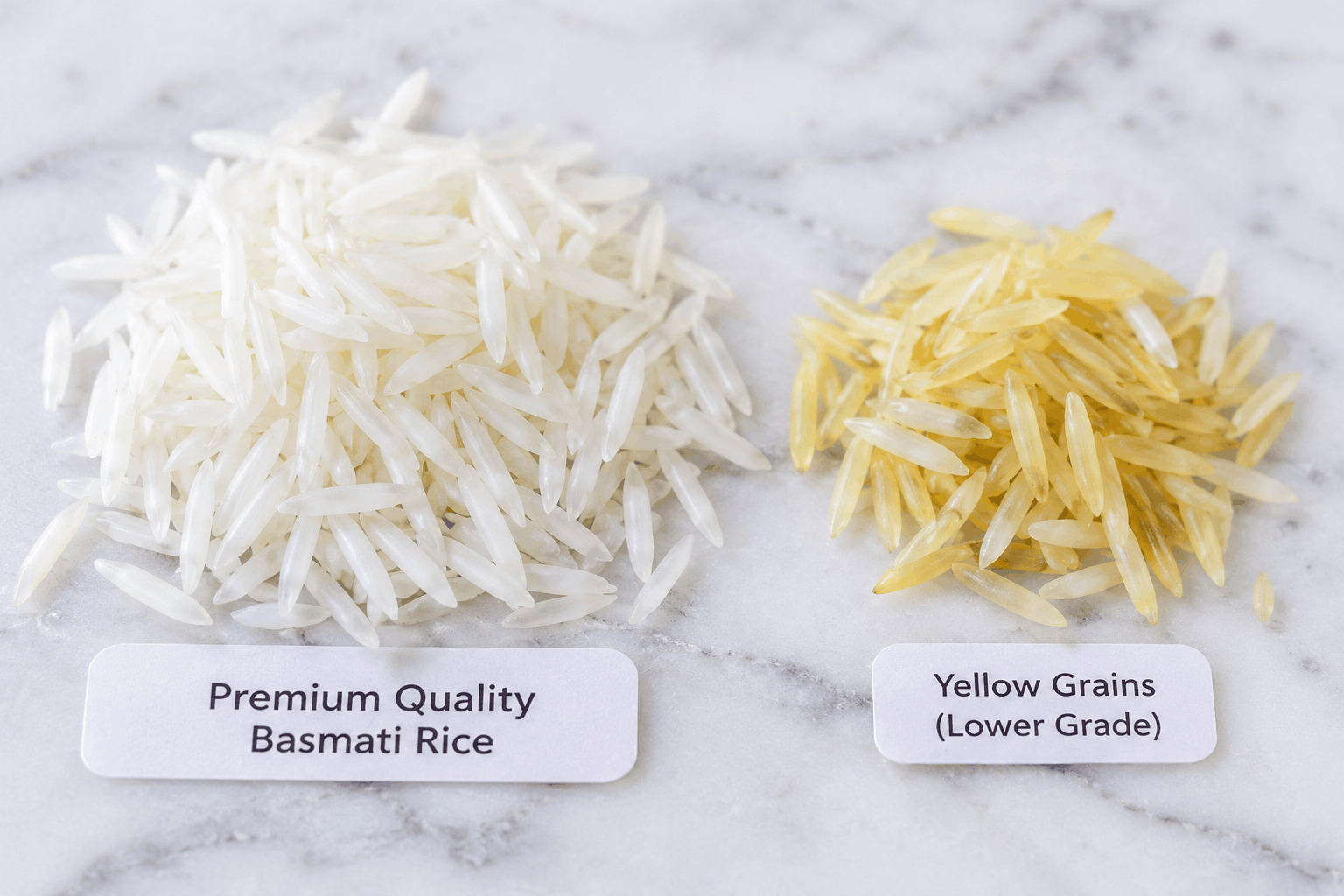
The scientific term for the browning effect that changes the color of rice to yellow is the Maillard reaction. The degrees of the reaction depend on the level of moisture, temperature and the length of time rice is stored. Cool temperature and proper moisture levels can prevent yellowing of rice. Proper drying, moisture control and good storage can prevent discoloration.
The presence of yellow or discolored rice in a shipment creates immediate apprehension in the buyers and rightfully so. One must consider, is the rice old, mishandled or simply not fit for the contract? When the buyers and sellers (importers, distributors and private labels) of rice work with Indian rice suppliers, they are interested in understanding the phenomenon of yellowing and how to prevent it as it has an impact on the quality of the rice.

What causes rice to turn yellow during storage?
Yellowing in rice is caused by a combination of chemical, biological and environmental factors.
Maillard reaction and moisture
The Maillard reaction occurs between sugars and amino acids that are naturally occurring in the endosperm of grains and may result in discoloration. Moisture and heat can facilitate this reaction. Rice stored at higher temperatures and humidity can promote the formation of yellow coloration, even in the absence of microbial activity.
Fat oxidation and rancidity
The outer layers of rice grains contain fats that can promote oxidation. The exposure to heat and light can promote oxidation and result in a yellow discoloration and an off odor. Oxidized rice is at a greater risk of rancidity, and may also affect the cooking quality of the rice.
Fungal contamination
Penicillium and Aspergillus species can result in the formation of yellow discoloration in paddy and rice, respectively. Yellowing due to fungi can be patchy and may have a musty odor. This may indicate storage issues and can result in a failure of quality and food safety checks.
Storage duration and conditions
Long grain basmati rice storage periods, especially without climate control, can promote the formation of yellow rice. Rice stored in warehouses with poor ventilation and inconsistent humidity can promote both the Maillard reaction and fungal growth.
Is yellow rice safe to eat?
Yellowing from the Maillard reaction does change the appearance of rice, and often the aroma as well. Yellowing caused by fungal contamination is a different issue. Moldy rice can have mycotoxins and should not be sold or eaten. Yellowing caused by the Maillard reaction does not affect the safety of the rice.
How does yellow rice affect grain quality and marketability?
For B2B customers, yellow grains affects three main things:
- Visual grading. Yellow kernel percentage is a defined quality parameter in most export contracts, with maximum tolerances specified by grade.
- Market value. Discolored rice is downgraded and sold at a lower price, even when the cooking and nutritional properties are largely unaffected.
- Buyer confidence. Consistent yellow-grain tolerance across shipments signals whether a supplier maintains disciplined drying, storage, and quality-control practices.
Buyers who purchase a large quantity of rice should have a maximum level of yellow grains in the rice in the purchase contract, and check the inspection reports, rather than relying on sample batches.
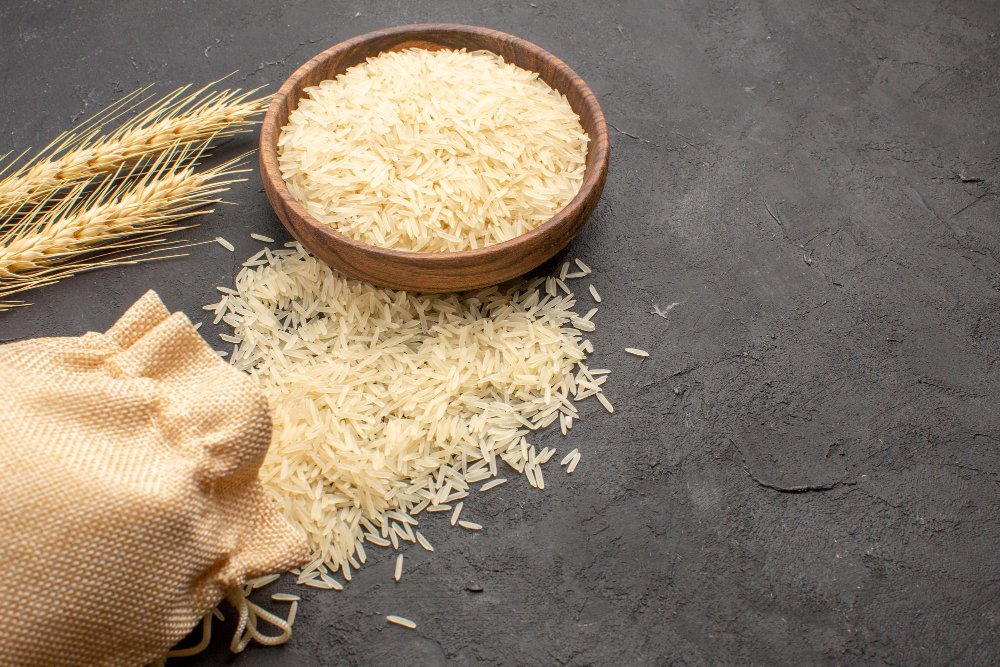
How can yellowing be prevented during rice storage?
Preventing yellow discoloration comes down to controlling the conditions that drive the Maillard reaction, fat oxidation, and fungal growth.
Proper drying before storage
Paddy should be dried to a safe moisture level – generally below 14% – immediately after harvest. Grain stored at higher moisture content is significantly more prone to both chemical yellowing and mold development.
Temperature-controlled storage
Maintaining constant, cool temperatures in storage slows the Maillard reaction. Warehouses that avoid direct heat exposure keep grain color and aroma longer. Those subject to seasonal temperature fluctuations cause grain color to change and grain aroma to fade.
Humidity and Ventilation Control
Good airflow and humidity control prevent the migration of moisture within stored rice, one of the main causes of localized fungal attack and yellowing. Once rice leaves the bulk storage, the kind of packaging used is also critical.
Shorter Storage Cycles and Stock Rotation
Stock rotation, combined with good discipline in maintaining shorter storage cycles, minimizes the cumulative effect of heat and moisture on the grain. Shorter storage cycles are especially beneficial to preserve color, as well as cooking quality, of non-aged grains.
Quality Inspection before Dispatch
Sorting and optical grading before packing removes discolored grains, resulting in a yellow kernel percentage within contract limits. This is especially crucial for export shipments, as most importers practice strict visual grading upon arrival.
Where Supplier Discipline Makes the Difference
Yellow grain percentage is one of the visible indicators of how a supplier manages the drying and storage of rice prior to shipping. GCDN Rice, based in Delhi and established in 1952, processes and exports various types of rice including 1121, 1509, 1401 and 1718, basmati and non-basmati, with drying and storage processes that guarantee uniform moisture levels and timely shipment. For buyers requiring a certain percentage of yellow kernels, ensuring a supplier maintains strict storage and inspection processes is as important as checking if the grain length is within limits.
Consistent Grain Color: Yellow Discoloration In Rice
Yellow discoloration in rice isn’t an unexpected random quality variation. It is the result of chemical reactions involving heat, moisture, and time. Prospective buyers that are knowledgeable about the chemistry can ask better questions to their suppliers about how paddy is dried, how moisture is monitored during storage, and how often the stock is rotated before shipping.
For importers and distributors, and private-label brands, it is practical to build intolerance to yellow kernels into purchase specifications, and request visual grading reports for shipments. This helps ensure each shipment received meets minimum quality standards.

Frequently Asked Questions
What percentage of yellow kernels is acceptable in export-grade rice?
Export grade contracts typically stipulate an acceptable percentage of yellow kernels. Buyers should determine this from their suppliers, and request grading reports before shipment.
Does yellow rice taste different from normal rice?
Rice can be discolored by the Maillard reaction. While this can change the color and aroma slightly, it is still considered edible. Rice with fungal contamination, like Mycotoxin contamination, will have a musty and off-taste, and should be discarded.
Can yellow rice be sold or must it be discarded?
Heat and moisture can discolor rice, and while this rice can be sold at a lower price, fungal contamination can also lead to discoloration. Batch testing is needed to see if rice meets food safety standards, and until proven safe, it should be discarded.
How long can rice be stored before yellowing becomes a risk?
Yellowing depends on the conditions of the rice. Cool, dry conditions will slow the process, and warm, moist conditions will accelerate the process. Rice can be stored for a long time and still be safe to eat.
What should buyers ask suppliers to confirm good storage practices?
Buyers should ask what the target moisture content of the rice is, what the temperatures and humidity of the warehouse are, what stock rotation practices are in place, and if optical sorting is used.